Showing posts with label Healing into Possibility. Show all posts

Wednesday, April 1, 2015

Possessed by Possessions

Do we have more stuff than we actually need or want
by Alison Bonds Shapiro, M.B.A. in Healing Into Possibility
Originally published online by Psychology Today
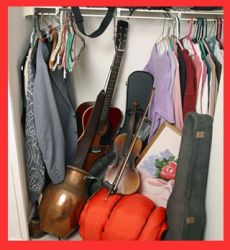
I met a woman the other day whose story intrigued me and helped me think about something that has been on my mind for some time now. When the last of their 3 children grew up and went to college, she and her husband sold their house and their belongings - all but a few essentials - and moved onto a 42-foot boat. If you have ever been on a 42-foot boat you know there is very little storage space.

Storage space allows us to accumulate things - rooms and piles of stuff. You can't keep many possessions without a place to put them. I have been thinking about possessions lately. I am also in the process of downsizing although I won't be living on a boat (as delightful an idea as that may be). As I do downsize I have been wondering about the balance between enough and too much. What are the benefits and costs of having possessions?...Read The origianl article 

Monday, January 19, 2015

Ordinary Joy


Where do we find the joy in our lives?
by Alison Bonds Shapiro, M.B.A. in Healing Into Possibility
Originally published online by Psychology Today

Joy is a wellspring. It’s not the same as happiness, although they are related. Joy is fundamental, a way of experiencing the world.


An action done with joy brings a sense of wellbeing. Doing anything this way is a sensory delight.

Something as simple as washing the dishes can brighten a day - watching the bubbles form, feeling the warmth of the water, the weight of the dishes in our hands. We can see the effect of joy if we compare the experience of doing dishes when we are joyful and doing dishes when we are annoyed. Doing the dishes, or anything else, with anger or resentment is a tense and irritating task. We wish we were anywhere else doing anything as long as it was more “important” than washing dishes.

Read the original article...

Cultivating Curiosity


How do we befriend ourselves?
by Alison Bonds Shapiro, M.B.A. in Healing Into Possibility
Originally published online by Psychology Today


What does it take to make friends with who we are - to receive ourselves with an open heart? First we need to know whom are we befriending. That might seem obvious. We think we know who we are. But it may not be as obvious as we think. We are each a moving target. We do not stay the same from moment to moment, much less from year to year.

Every encounter we have with life changes us. Every experience rewires a part of our brains. We are always changing. To truly befriend ourselves - to be open to who and what we are – we can practice the willingness to discover ourselves anew. As we grow and change through our lives, we have continuous opportunities to learn more about and deepen our welcome for ourselves.

Read more...

What's Wrong With Getting It Right?


The perils of trying to be perfect
by Alison Bonds Shapiro, M.B.A. in Healing Into Possibility
Originally published online by Psychology Today


From the time I can remember the measurement of “success” was doing whatever it was I was doing “right”. Questions had only one “right” answer and my job was to find that answer and hold onto it. When I was small, the questions were easy. One plus one had a “right” answer.As I grew older the questions grew more complex. Simple answers were hard to come by but “right” answers were still required. I remember learning to take standardized tests. Standardized tests have required answers. But while I was filling in the circle next to the required answer, I often knew full well that if I considered the question more broadly and more seriously the required answer did not make sense. It was too simplistic. Learning to give the required answers on a test is a skill unto itself, often having little to do with accuracy.

The relentless requirement to “get it right” in a world full of complexity is a form of tyranny. And like all tyranny it is merciless. Having to “get it right” presumes that it's both possible and desirable to figure out an ultimate, all-inclusive, and unique solution. And we can't rest until we do. We believe that we have no other viable choice. If we don't "get it right", someone else will beat us to it. And then, heaven forbid, we will be “wrong.”


Read the original article...

The Kindest Choice


What happens when we begin again?
by Alison Bonds Shapiro, M.B.A. in Healing Into Possibility
Originally published online by Psychology Today

The hardest thing I have ever had to do is to let go of what has happened and begin again. Whether it was the fear that my body experienced when deeply injured or the grief that came from seeing the way my actions or inactions caused harm to someone else or the forgiveness of the harm that has come to me or the searing experience of the death of someone I loved, being willing to meet what has happened and find a way to live with it and move on has not been easy. I want to cling to my rage or my embarrassment or my grief. It is what I know. To let that go is to experience without reservation the awful the truth of what has happened and the realization of the uncertainty that lies beneath it. Beginning again has long seemed to me to be very difficult work.

Over the years I have learned that there is another way to think about beginning again - a way that, while it may be difficult, is rich in possibilities. Frank Ostaseski, founder of the The Metta Institute, describes beginning again as “the kindest choice”. Is that possible? Is beginning again kind? Where would the kindness come from? To whom are we being kind? Ourselves? Someone else?

Read the original article...

A Response to Loss


Can Loss Wake Us Up?
by Alison Bonds Shapiro, M.B.A. in Healing Into Possibility
Originally published online by Psychology Today

The season of joy and the season of sorrow rings around us. We like to think of these year-end celebrations as a time of innocent joy without complications. But they are not. Moss covered mazeHolidays sharpen our awareness both of love and joy and of loss and sorrow. Our lives come into clearer focus as we compare them to our expectations of the holidays.

I have been reflecting on love and loss this holiday. So many people I know are experiencing one kind of loss or another. So many people are held strong by love.

Read the original article...

Being Wary of Our Expectations


Do our expectations know the territory?
by Alison Bonds Shapiro, M.B.A. in Healing Into Possibility
Originally published online by Psychology Today on 10/4/2012


Expectations are part of everything we do. We put gas in the car and we expect the gas pump to behave more or less the same way each time we use it.


We go to the ATM and expect that, if we have cash in our account and follow the ATM machine’s instructions (sometimes a challenge), money will come out of the slot. Expectations organize our lives, help us forecast likely outcomes and prioritize and budget our time and resources. We all have a basket full. We use them to determine what we expect of the world, of other people and of ourselves.

Read the original article...

Making Categories

How do we limit ourselves?
by Alison Bonds Shapiro, M.B.A. in Healing Into Possibility
Originally published online by Psychology Today


Our brains are constantly seeking ways to manage information overload both through limiting the amount of stimuli we are willing to notice and through creating categories into which to fit things. Both sensory information limits and categories help our brains be efficient.

To define a category we choose, consciously or unconsciously, a limited set of criteria to describe the category. The criteria we choose are based on any number of things, including experience, acquired information and emotional responses.

Read the original article...

The Power of Imagery


Can we imagine ourselves well?
by Alison Bonds Shapiro, M.B.A. in Healing Into Possibility
Originally published online by Psychology Today


Imagination is a wonderful thing. I love dreaming of trips I’ll make or people I’ll meet. Most of us use imagination in one way or another every day. We imagine what our future might be. We imagine the taste of the new flavor of ice cream that we are about to try. We imagine how we will play with our children. We imagine ourselves thinner or more fit or wiser or kinder. As children we often spend time in imaginary worlds, dreaming that we are riding on spaceships or living in castles or showing off to our friends. Images flood our minds all the time and we get caught up in them.We also can and often do imagine disasters and get caught up in those images. We see images that are not so pleasant or positive. What will happen if I lose my keys? What will happen if the pipe bursts and everything gets wet? What will happen if I back the car up and hit a post?


Whatever images we see and however much we get caught up in our imaginations, we generally believe that images are simply images, just pictures in our minds. We don’t think that images can make a physical difference to our bodies. But they can.

Read the original article...

Making a Difference


Who we are, far more than what we do, has the power to lift the world.
by Alison Bonds Shapiro, M.B.A. in Healing Into Possibility
Originally published online by Psychology Today

Ever since my friend, Joe, died, I have been reflecting on his life and the difference he made to so many people, including me. Before I ever met Joe, I knew his voice. For years, Joe and his brother Nathan wrote and performed and recorded music together. Nathan is a rabbi. Joe was a cantor. I have many of their recordings, all of which are treasures—full of grace, hope, compassion and love. Both had gorgeous voices, and the way their voices harmonized, being brothers, was impeccable. Making music together and teaching life’s lessons through their music were the core of both their lives.Then, more than 25 years ago, again before I ever met him, Joe was injured in a car accident while traveling out of the United States. Joe suffered a terrible brain injury and was a long way from sophisticated medical treatment when it happened. Close to death, Joe was ultimately transferred to high-tech medical facilities. Many people fought for Joe and Joe survived.


As a result of his brain injury, Joe’s physical abilities were deeply compromised. Nathan, who is a physical therapist as well as a rabbi, decided that he would work with Joe night and day to help Joe recover. Never before or since have I seen love between two brothers as deep as that between Joe and Nathan.

Trusting Each Other


What is trust anyway?
by Alison Bonds Shapiro, M.B.A. in Healing Into Possibility
Originally published online by Psychology Today

Trust is a word we hear a lot. Recently I heard a story on the radio about investment fraud In which one of the victims of the fraud said, "I'll never trust anyone again." A strong statement about trust and one worth exploring.


What is trust anyway? The definitions of trust indicate that trust in another person imposes upon him a duty of care that asks him to be someone we can rely upon to do what we have asked of him. It seems straightforward to understand when we read it, but what happens when we examine the way trust works? Trust requires a relationship between two people, and all relationships are complex.

Read the original article...

More Than 100 Percent


What happens when we experience a loss?
by Alison Bonds Shapiro, M.B.A. in Healing Into Possibility
Originally published online by Psychology Today


What happens when we experience a loss? At the time of the loss, some part of what we claim as our lives, bodies, or things are gone. We grieve. We feel injured. We may feel diminished or "less than" we were before the loss. Among other things, Merriam-Webster's definition says loss means: "destruction, ruin" and "the act of losing possession; the harm or privation resulting from loss or separation".

I speak with many people who have horrendous injuries and losses of function - so difficult that, in many cases, it is astonishing that they live. Very often they tell me that they know their lives will never be a 100% again, but is this true? In the long run after a loss do we have to wind up "less than" we were before the loss?

Read the original article...

Good Intentions?


Do we unconsciously wish ourselves ill?
by Alison Bonds Shapiro, M.B.A. in Healing Into Possibility
Originally published online by Psychology Today

I recently read an article about the effect of other people's good intentions on us. Others' good intentions have been shown to decrease our pain, increase our pleasure, and, yes, even make food taste better. It's a delight to see a study done that articulates what we know from our own experience. Most of us have witnessed or felt the power of others' good or unkind intentions on us and ours on them. But have we stopped to consider the power of our intentions, kind or unkind, on ourselves?

The effect of our intentions on ourselves may be harder for us to see, but this effect is even more crucial to our wellbeing than the power of the intentions of other people. The person we spend the most time with is our self. What we wish for ourselves plays out in every moment of our lives, 24/7 awake and asleep. Our intentions towards ourselves change our outlook on life, directly influence the quality of our lives, and support our resilience when hard times come our way.

One Thing Leads to Another

Can we reconcile ourselves to the choices we have made?
by Alison Bonds Shapiro, M.B.A. in Healing Into Possibility
Originally published online by Psychology Today

The year is turning. The solstice has passed. We are about to call 2011 ended and 2012 begun. In this quiet between the holidays, there is a pause, a sense of taking a collective breath as we look at the year that is ending. And 2011 has been a year of tumultuous change.

Celebrations of one year ending and another beginning tend to be filled with hope, sometimes relief, a sense of promise. Hope is wonderful. It helps us to reach for the satisfaction in our lives. But hope is not the only emotion that arises at this time of year. The end of the year can also be a time of sorrow and disappointment. When we look at the year just passed and face the results of the choices we have made, positive or negative, we may find that we are not so pleased with what we see.

Read the original article...

Seasonal Suffering: The Sting of Expectations


Can we find joy in what we have?

by Alison Bonds Shapiro, M.B.A. in Healing Into Possibility
Originally published online by Psychology Today


In this season of joy there is also a great deal of suffering. Two kinds of suffering that arise during the holidays come to mind and one directly influences the other. The first kind of holiday suffering is created by our expectations. We tell ourselves what our lives should be and we imagine what our lives will be. These expectations of what is true and what will be true are the product of the stories we tell ourselves about our lives. They are not the same as what is actually happening.

Our internal stories are essential. I'm not suggesting that we can or should rid ourselves of our stories, only that we realize we have constructed them, often with a minimum of tangible information.

Read the original article...

Habits of Mind: The Flavors of Our Experience


How do we change the flavor of our experience?
by Alison Bonds Shapiro, M.B.A. in Healing Into Possibility
Originally published online by Psychology Today

My friend and teacher, Frank, talked to me the other day about habits of mind and the underlying tone they give to whatever we are doing. It's a fascinating thing to understand and notice. We don't generally pay attention at this level. Habits of mind are subtle.

They are like lemon juice flavoring a glass of tea. We might not see the lemon juice when we look at the glass, but it's there and its presence changes the flavor of our experience of drinking tea. Habits of mind do exactly the same thing. They change the flavor of the moments of our lives.

Read the original article...

Anxiety: A Modern Plague


Reducing anxiety helps us live joyfully and fully.
by Alison Bonds Shapiro, M.B.A. in Healing Into Possibility
Originally published online by Psychology Today


Anxiety is one of our modern plagues. Its effects are visible everywhere, interfering with our happiness and our abilitiy to live productively. Anxiety limits our connections with other people, saps our energy, reduces our focus and our skillfulness and undermines our health.  Most of us experience significant anxiety at one point or another, some of us more often than others. Recently several people have asked me questions about the ongoing anxiety that they experience post injury. Although anxiety arises from the same major causes regardless of the particulars of our circumstances, looking at the anxiety that develops in response to illness and injury can make these causes of anxiety easier to see for all of us.

The first and most obvious cause of anxiety is uncertainty. We understand our world by the way we move in it, by the way people respond to us and how we can affect things around us. Any significant change that shakes the way we know our world and our place within it, like a natural disaster, the loss of a job, a death or a major change in our physical wellbeing, disrupts our sense of what is real. "This (whatever it is) is not happening to me!"
Read the original article...

The Benefits of Restraint


What are we practicing? Greed or Restraint?
by Alison Bonds Shapiro, M.B.A. in Healing Into Possibility
Originally published online by Psychology Today

We now have the capacity to express ourselves in many ways and in many media outlets in as idiosyncratic a manner as we please. The resulting cacophony of competing interests makes people shout all the louder in order to be heard - just as people do in a crowded restaurant when the volume increases and ordinary conversation becomes useless.


Somewhere in all of this noise, restraint is getting a bad name. When we shout louder we invest more in our opinions. It takes more energy to get attention. And. as a result, we may get very focused on our view, "I want things to go my way - right now". Feeling entitled to prevail in our own view is a form of greed. That may seem like an odd word to use, but think about it. Wanting what we want without regard to the consequences, whether it's money, or ice cream, or our opinions to prevail, all comes from the same source: "I want what I want this minute, no matter what!" All that shouting our opinions leads us into practicing greed.


Read the original article...

Preparing for Adversity

How can practicing art help us?
by Alison Bonds Shapiro, M.B.A. in Healing Into Possibility
Originally published online by Psychology Today

There are many wonderful ways in which individuals, either by themselves or with therapists, use art in the healing journey. Art can be used as a way to discover and express feelings, as a way to rebuild coordination, and as a way to communicate, to name but a few. These are tremendously beneficial approaches.Recently, however, I was asked a question about art and healing that required me to think in a different way about the benefits of practicing art. When invited to hang a couple of paintings in a hospital last month, the question I was asked was, "How did being an artist affect your healing?" That question invited me to explore the usefulness of practicing art before we are injured or ill as a preparation for facing adversity.


To be clear, all of us are artists in one way or another, creatively responding to life's demands. Some of us practice making art with traditional materials, like paint or clay. 

Read the original article...

Learning With Our Friends: The Zone of Proximal Development


Understanding how and what we need to learn
by Alison Bonds Shapiro, M.B.A. in Healing Into Possibility
Originally published online by Psychology Today

The "zone of proximal development" is a concept introduced by a Russian psychologist and child development specialist named Lev Vygotsky. While the concept is usually applied to children and traditional educational settings, the idea is very useful when thinking about recovery from a sudden injury or major illness, particularly when that injury or illness significantly disrupts our ability to function.


To understand the idea of the zone of proximal development, we start with examining what we can do independently, what we already know. This is the boundary of the zone. We then look for the areas in which we can learn new skills through the assistance of another person. These areas of new learning with assistance constitute the zone of proximal development. As we progress through this zone, we increase our ability to work independently by first mastering tasks with help and then learning to do those tasks without help.

Read the original article...